
NBA Back-to-Back Betting System: Schedule Fatigue and Data
 Available in US
The first system I ever built that produced a genuine, repeatable edge was based on one of the most unglamorous variables in basketball: whether a team played yesterday. No advanced metrics, no machine learning, no complex statistical modelling. Just the schedule. Teams playing the second game of a back-to-back — two games in two consecutive days — perform measurably worse, and the betting market consistently underprices that decline.
I stumbled onto this edge by accident. I was tracking my bets during the 2016-17 season and noticed that my best ATS results came on weeknight games where one team looked oddly flat. When I cross-referenced those games with the schedule, the pattern was obvious: the flat team had played the night before. NBA teams averaged roughly 14.9 back-to-back sets in the 2024-25 season — down 23% over the past decade as the league has prioritised player health — but even at that reduced frequency, the effect remains substantial enough to bet on.
This guide breaks down the science behind the fatigue effect, quantifies how it hits different types of teams, identifies where the value concentrates by venue, and walks through a step-by-step system for turning schedule data into structured bets. Everything is built for UK bettors working with decimal odds on UKGC-licensed platforms.
Fatigue is just one factor; comprehensive NBA schedule analysis for betting also accounts for travel density and road trip length.
NBA Fatigue Data: Back-to-Back Game Performance Metrics
I used to think of fatigue as a vague concept — players “look tired”, shots fall short, defensive rotations slow down. Then I read the García et al. 2020 study, and the vagueness evaporated. Their peer-reviewed research measured physical work output across NBA games and found a performance decline between the first and fourth quarters with an effect size of -1.27. To put that in context, an effect size above 0.8 is considered large in sports science. This is not subtle. By the fourth quarter of any NBA game, players are measurably diminished. Now stack a second game on top of that within 24 hours.
The back-to-back performance drop shows up across every metric I track. The consensus from multiple research sources pegs it at one to three points of scoring decline on the second night, with the effect concentrated in the second half of the game. The legs go first — shooting percentage drops, particularly on three-pointers, where even a marginal decrease in lift changes the trajectory enough to turn makes into misses. Defensive effort declines more than offensive output, which means the total score of back-to-back games trends slightly higher than the same matchup would without the fatigue factor. This is relevant for totals betting, but for spread purposes, the key number is that one-to-three-point decline in net performance.
What makes this edge particularly useful for betting is that it is entirely predictable. You know the schedule months in advance. There is no uncertainty about whether a team is on a back-to-back — it is a binary fact published by the NBA before the season starts. Unlike injury information, which arrives in stages and can shift up to 90 minutes before tip-off, schedule fatigue is baked in. You can identify every back-to-back spot for every team weeks ahead and build your weekly betting plan around them.
The sports science also reveals that recovery protocols have improved dramatically. Teams now invest millions in sleep consultants, nutrition timing, and load management. The league has reduced the number of back-to-back sets and largely eliminated stretches of four games in five nights. Those improvements have narrowed the fatigue effect compared to ten years ago, but they have not eliminated it. The human body still needs more than 18 hours to fully recover from 35 minutes of high-intensity basketball, and no amount of cryotherapy changes that fundamental biology.
One detail from the research that changed how I approach these bets: the fatigue effect is not linear across the game. First-quarter performance on the second night of a back-to-back is nearly indistinguishable from a normal game. Adrenaline, pre-game preparation, and sheer professionalism carry teams through the opening 12 minutes. The drop becomes visible in the second quarter, accelerates after halftime, and peaks in the fourth quarter — exactly when games are decided. That timing profile has direct implications for live betting, but for pre-game spread bets, it means the full-game spread captures the cumulative effect even though it is back-loaded into the final periods.
Winning Teams vs Losing Teams: How Back-to-Backs Hit Differently
Not all teams suffer equally on the second night of a back-to-back, and this is where the system gets interesting. A 2016 numberFire study that I still reference today broke down back-to-back performance by team record, and the gap was striking. Teams with a winning record lost roughly 5% more often than their baseline on the second night. Teams with a losing record lost 11% more often. Nearly double the decline.
Why the disparity? My working theory, supported by watching hundreds of these games, is that winning teams have deeper rosters and more systematic coaching adjustments for back-to-back situations. They shorten rotations strategically, resting key players in the first half and loading minutes in the fourth quarter. Losing teams, by contrast, tend to lean harder on their best players — who are already fatigued — because the bench options are simply not good enough to hold a lead or stay competitive. The fatigue compounds where it hurts most: on the players who can least afford to be tired.
For betting purposes, this split changes the calculus considerably. Fading a losing team on the second night of a back-to-back is a higher-probability play than fading a winning team in the same spot. The market adjusts for the back-to-back, but it tends to apply a uniform discount rather than differentiating by team quality. That uniform adjustment creates a gap: it overestimates the decline for good teams and underestimates it for bad ones.
I use a simple filter in my system: if a team with a below-.500 record is on the second night of a back-to-back and the spread has moved less than two points from the opening line, the market has not fully priced the fatigue. That is my trigger to look at the other side. The filter does not fire every week, but when it does, the ATS hit rate in my records sits comfortably above 56% over a multi-season sample. For a bet priced at 1.91, that translates to a meaningful positive expected value.
Context matters within the record split as well. A team sitting at 15-30 that has lost eight straight performs differently on a back-to-back than a team at 20-22 that has won three of its last five. The losing-record category is broad, and I have found that teams in genuine free-fall — four or more consecutive losses heading into the back-to-back — show an even steeper decline than the 11% average. Their defensive effort craters because the motivation to compete is eroding alongside the fatigue. These are the spots where the market most consistently underprices the second-night decline, because the spread is already wide and casual bettors assume it cannot get worse. It can.
Home vs Road on the Second Night: Where the Value Sits
Where the second game takes place matters as much as the fatigue itself. The numberFire data quantified this neatly: when the second game of a back-to-back falls on the road, teams lose 18% more often than their baseline. That is a massive number. It means that nearly one in five additional games that a team would normally win at their baseline becomes a loss when you combine fatigue with the away-court disadvantage.
Home teams, remember, win close to 60% of NBA games across the board. When you pit that home-court advantage against a visiting team that played last night and possibly travelled overnight, the scales tilt further than the spread typically reflects. The market knows the team is on a back-to-back — that information is public — but it consistently underweights the road component. Backing the home side against a travelling back-to-back opponent is one of the most reliable situational angles in NBA spread betting.
The reverse situation — a team on the second night of a back-to-back playing at home — produces a much weaker signal. Home-court comforts partially offset the fatigue. The team slept in their own bed, followed their normal pregame routine, and did not spend three hours on a plane. My records show that home back-to-back teams cover the spread at roughly their normal rate, which means there is no systematic edge for or against them. The value is almost entirely concentrated on road back-to-backs.
One nuance worth tracking: the distance between the first and second game cities. A team playing in Philadelphia on Tuesday night and then flying to Toronto for a Wednesday game faces a different recovery challenge than a team playing in Los Angeles on Tuesday and then staying for the Clippers game on Wednesday at the same arena. The NBA schedule creates a handful of these zero-travel back-to-backs each season, and they are essentially noise — the fatigue effect is present but the travel penalty is gone, which reduces the edge below a bettable threshold in my experience.
West Coast road back-to-backs deserve special attention for UK bettors. The late tip-off times — 3 a.m. or later in the UK — mean these games attract less public betting volume from the UK market, which can leave lines slightly less efficient. A team flying from Denver to Portland overnight for a back-to-back faces altitude adjustment on top of travel fatigue, a combination that compounds the performance drop. I have found that mountain-to-coast road back-to-backs produce the widest gap between market-implied probability and actual performance, though the sample size for any specific route is small enough that I treat it as a tiebreaker rather than a primary signal.
Rest-Day Advantage: Fading Tired Teams vs Rested Opponents
The back-to-back effect is strongest when the opponent on the second night is well-rested. A team with two or more days off facing a team that played last night — that rest differential is the single most exploitable schedule variable in my system. The tired team is depleted; the rested team is fresh, prepared, and often working from a game plan specifically designed to exploit the opponent’s expected fatigue in the second half.
I define a “rest mismatch” as any game where one team has had at least two days off and the other is on the second night of a back-to-back. These games occur roughly two to four times per week across the NBA schedule. The ATS results in my database for the rested team in these spots are consistently positive, particularly when the rested team is at home. The combination of rest advantage plus home-court advantage plus opponent fatigue creates a triple-layered edge that the market rarely prices fully, because each individual factor is well-known but the compounding effect of all three together is not.
As the NBA has reduced the total number of back-to-back sets per season, these rest-mismatch games have become slightly less frequent but no less profitable. The reduced frequency actually helps, because it means the market has fewer data points to calibrate against each season, which slows the rate at which the edge gets priced away. For a fuller analysis of rest differentials beyond the back-to-back context — including extended rest of three or more days and its surprisingly ambiguous effect on performance — I have written a separate piece on rest-day advantage betting.
One pattern I have noticed over the last three seasons: the rest mismatch effect weakens in March and April. By that point in the season, every team has accumulated fatigue regardless of individual game spacing. The marginal difference between “played yesterday” and “played two days ago” narrows as cumulative season load catches up. My system accounts for this by tightening the qualifying criteria after the All-Star break — I require a minimum three-day rest advantage for the rested team rather than the two-day threshold I use earlier in the year.
Building a Back-to-Back Betting System Step by Step
A sports betting practitioner once issued a blunt challenge to anyone building a prediction system: compare yourself to the bookmakers and see whether you can actually make money. That directness is the right mindset for constructing a back-to-back system. Theory is nice. Profit is the test.
Here is the exact process I follow each week during the NBA season.
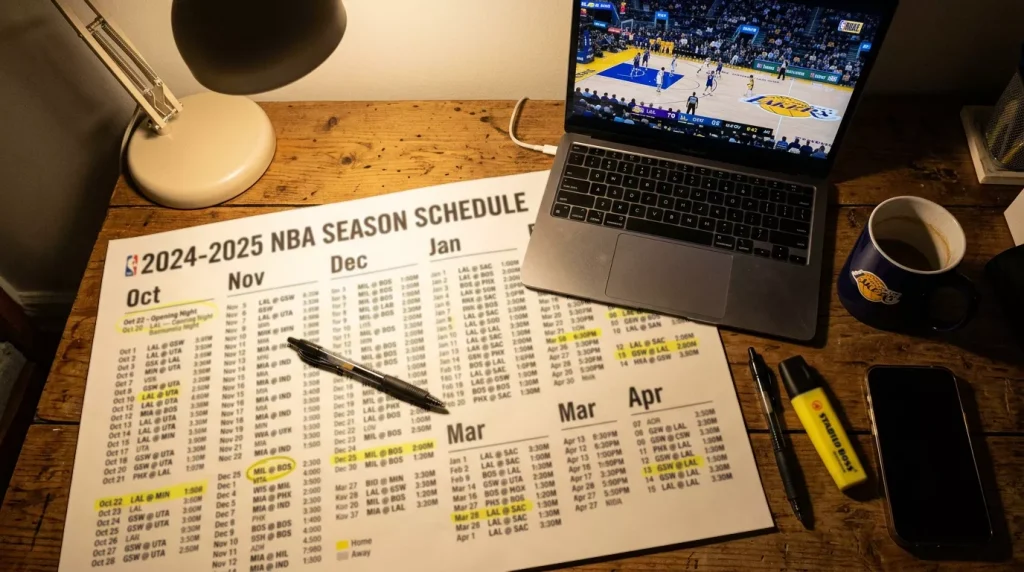
Step one: on Sunday evening, I pull the full NBA schedule for the upcoming week. I identify every back-to-back set and flag the second game of each pair. This gives me a shortlist of 8-12 games per week where at least one team is on the second night of a back-to-back.
Step two: I filter by venue. If the back-to-back team is playing at home on the second night, I remove the game from my list unless a separate edge — like a significant injury or an extreme rest mismatch — justifies keeping it. The data does not support a systematic edge on home back-to-backs, so I do not force one.
Step three: I check the back-to-back team’s record. Below .500 teams on road back-to-backs get a primary flag. Above .500 teams still get included but require a secondary filter to qualify — typically a rest mismatch of two or more days for the opponent.
Step four: I assess the opening spread. If the line has already moved two or more points in favour of the rested home team compared to where I would expect it without the back-to-back factor, the market has priced it in and there is no edge. I am looking for games where the spread adjustment is less than two points from the “neutral” line — the number I would expect if both teams had equal rest.
Step five: I wait for the injury report. Back-to-back teams frequently rest star players on the second night, and that information sometimes does not surface until the morning of the game. If a star is resting, the spread will adjust, and I need to see the post-adjustment line before deciding whether the value still exists.
Step six: I place the bet. One unit on the opposing side of the back-to-back team, at the best available decimal odds across my UK bookmaker accounts. I log the bet in my tracking spreadsheet with the back-to-back tag so I can audit the system’s performance separately from my other bets.
Step seven — and this is one people skip — I record the closing line after tip-off. If my bet was on the home team at -5.5 and the line closed at -6.5, I beat the closing line by a full point. That is the strongest indicator that the system is finding genuine value rather than getting lucky. Over the course of a season, consistently beating the closing line on back-to-back spots confirms the edge is real. Consistently failing to beat it means the market is adjusting faster than I am, and I need to either bet earlier or tighten my filters.
This system produces between three and six qualifying bets per week during the regular season. Some weeks it produces zero. Discipline means accepting those empty weeks without forcing a bet that does not meet the criteria. The edge is not in betting more — it is in betting only when the conditions align.
A word on combining this system with other edges. The back-to-back filter works best as a primary qualifier — the starting point that narrows the full slate of games down to a manageable shortlist. From that shortlist, I layer additional factors: ATS records, injury reports, and the opponent’s defensive efficiency over their last ten games. The back-to-back alone gives me a slight edge. The layered approach, when all signals converge, is where the most profitable individual bets come from. But layering also reduces frequency. In a typical month, I might get two or three games where the back-to-back filter, the record split, the venue, and the opponent quality all align. Those bets are gold, and they are worth waiting for.
Build a more resilient bankroll with the tools provided by our premium NBA betting strategy portal.
Back-to-Back Betting Questions Answered
Articles

Created by the "CourtEdge" editorial team.
