
NBA Pre-Game Analysis Checklist: 10 Steps Before Betting
 Available in US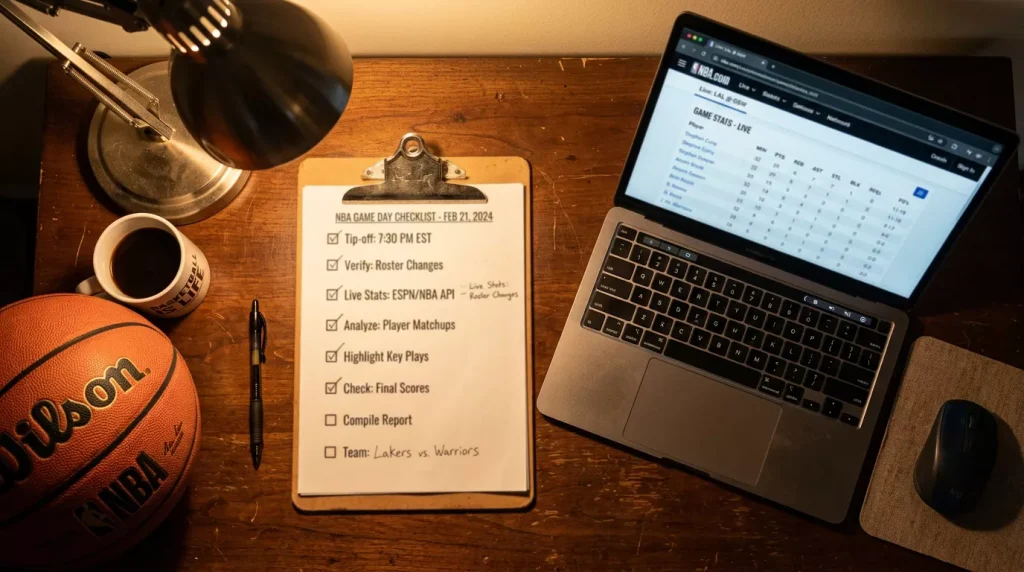
NBA Pre-Game Factors: Assessing Injuries and Schedule Rest
I used to bet NBA games the way most people order food at a restaurant — scan the menu, pick what looks good, and hope for the best. Then I started tracking which bets won and which lost, and a pattern emerged: the bets where I had done thorough pre-game work won at 56%. The bets where I had skipped steps won at 48%. That 8-percentage-point gap, applied across a full season, is the difference between profit and loss. So I built a checklist, and I have not placed a bet without running through it since 2019.
Step one: check the schedule. When did each team last play? Where? Is either team on the second night of a back-to-back? Is either team in the middle of a long road trip? NBA teams averaged 14.9 back-to-back games in the 2024-25 season, and schedule fatigue remains the most underpriced factor in the market. This step takes 30 seconds and eliminates obvious fatigue traps.
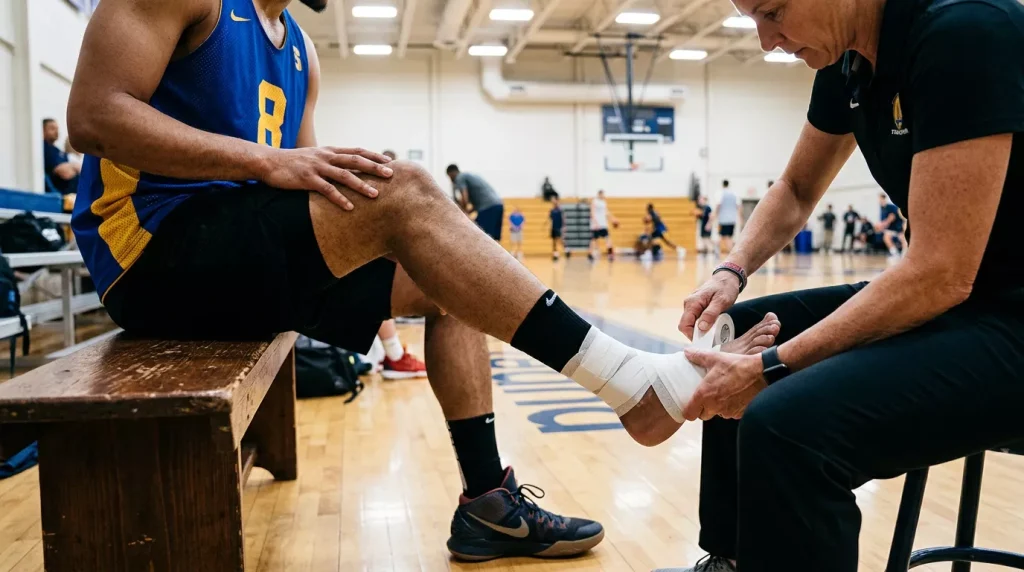
Step two: pull up the injury report. Not just for the team you are considering betting — for both teams. A missing role player on the opposing side might actually hurt your bet if it changes the matchup dynamics in a way you did not anticipate. Check the designations: probable, questionable, doubtful, out. Cross-reference with recent game participation — a player listed as questionable who has played through the designation for a week is almost certainly playing tonight.
Step three: confirm the expected starting lineups. Injury reports give availability; lineups give deployment. A team might have all five starters available but choose to rest one on a light night. Lineup confirmations typically arrive 30-60 minutes before tip-off, but beat reporters often share expected lineups earlier in the day. This step catches late scratches that the injury report missed.
Step four: calculate the rest differential. How many days off has each team had? If the gap is two or more days, the rested team has a structural advantage that may or may not be reflected in the bookmaker’s spread. Teams on the second game of a back-to-back show a performance dip of 1-3 points, and the effect is amplified on the road.
Step five: assess the matchup. This is where the analysis moves from logistics to basketball. How do these teams match up stylistically? Does the home team’s pace profile create a favourable or unfavourable dynamic against the visitor’s defensive scheme? Are there specific positional mismatches — a dominant centre against a team that plays small-ball, a quick guard against a team with slow perimeter defenders — that could swing the outcome? Matchup assessment is the most subjective step on the checklist, which is why it comes after the objective schedule and injury checks.
Steps 6-10: Stats, Line Movement, Value Check, Stake Size, and Final Review
Step six: pull the advanced stats. Net rating, offensive rating, defensive rating, pace, True Shooting percentage, and recent form (last 10 games). An XGBoost study using SHAP analysis confirmed that field goal percentage, defensive rebounds, and turnovers are the most consistently significant predictors of NBA outcomes across all game segments. Focus on these high-impact metrics rather than drowning in the full statistical catalogue. This step takes three minutes per game if you know where to look — NBA.com’s advanced stats page and Basketball Reference are both free and comprehensive.
Step seven: check line movement. Where did the spread open? Where is it now? Has it moved toward or against your side? If the line has moved against you by a full point or more, investigate why. Sharp money moving against your position is a warning sign. Public money moving against your position might actually be good news, because it creates better value on your side. The direction of the move matters less than the reason behind it.
Step eight: calculate your expected value. Using your estimated probability and the decimal odds available on your UK bookmaker, run the EV formula: (win probability x net profit) – (loss probability x stake). If the EV is positive and the margin exceeds 1.5% of the stake, the bet qualifies. If the EV is negative or the margin is razor-thin, pass. This is the step where most bettors fail — they skip the maths and bet on conviction alone. A 2020 simulation found that 1/5 Kelly criterion sizing delivered ROI over 98% in a season, while undisciplined staking led to ruin. The maths is not optional.
Step nine: determine your stake. If you use flat staking, this is straightforward — 1-2% of your current bankroll. If you use fractional Kelly, calculate the stake based on your EV estimate and the odds. Either way, the stake should be determined by your system, not by your emotions. A game that “feels” like a sure thing does not deserve a larger stake than a game that merely qualifies under your criteria. The system decides. You execute.
Step ten: final review. Before placing the bet, read the spread one more time. Confirm you are betting the correct side, the correct market (spread vs total vs moneyline), and the correct stake. Check that the odds have not moved since you calculated your EV. If anything has changed materially, recalculate. This step takes 10 seconds and prevents the kind of execution errors that cost me money in my early years — wrong team, wrong amount, wrong market.
Adapting the Checklist for Live Bets, Props, and Futures
The 10-step checklist is built for pre-game spread and totals bets, but it adapts to other markets with minor modifications.
For live bets, compress steps one through five into a pre-game screening session and add three live-specific checks: current score relative to pre-game expectation, foul trouble for key players, and momentum direction. The pre-game work informs your thesis; the live checks determine whether that thesis still holds after the game has started. If the pre-game analysis said “under” but the first quarter produced 65 combined points, the thesis is broken and the live bet should not happen.
For player props, replace step five (team matchup assessment) with individual matchup analysis: who is defending the target player, how many minutes is he likely to play given the spread, and has a teammate’s absence changed his usage rate? The statistical check in step six shifts from team-level metrics to player-level metrics: usage rate, True Shooting percentage over the last five games, and home/away splits for the specific prop market.
For futures, the checklist collapses into a longer-horizon version. Schedule and rest are irrelevant. Instead, substitute roster construction, strength of remaining schedule, and current market price relative to your assessed probability. The EV check (step eight) is the same but applied to implied probabilities derived from futures odds rather than single-game decimals.
The checklist is not a guarantee of profit. It is a guarantee of process. Every sharp bettor I know follows a structured pre-game routine, and while the specific steps vary, the principle is universal: systematic preparation outperforms instinct. For a detailed look at how injury data fits into the checklist and how to act on late availability news, my guide on NBA injury report betting covers that step in depth.
Articles


Prepared by the CourtEdge editorial staff.
