
NBA Over/Under Strategy: Pace and Efficiency Totals Systems
 Available in US
NBA Totals Markets: Exploiting Bookmaker Over/Under Lines
I spent my first two years betting NBA totals thinking the number was basically a guess. Pick a team that scores a lot, slam the over, collect. It took a string of painful losses — high-powered offences sleepwalking through games against elite defences — before I sat down and actually studied how those totals get built. Once I understood the machinery, the edges became obvious.
Every NBA total starts with a projection of possessions. A bookmaker’s trading desk takes each team’s pace — the number of possessions per 48 minutes — and averages them, then adjusts for venue, rest, and recent form. That raw possession estimate gets multiplied by each team’s offensive and defensive efficiency: points scored and allowed per 100 possessions. The result is a projected score for each side, and the sum becomes the opening total. It sounds mechanical, and it is — which is exactly why human biases create gaps between the posted number and reality.
The public overwhelmingly leans toward overs. Casual bettors want action, want points, want highlight-reel finishes. Bookmakers know this, so they shade totals slightly higher than their true projection to balance liability. That built-in bias means unders hit at a marginally better rate across full seasons than most bettors expect. I am not saying you should blindly bet every under — far from it — but recognising that the market has a structural lean toward overs is the first step to finding value on the other side.
Another thing most punters miss: totals are not set in isolation. Injury news, starting lineup confirmations, and even referee assignments filter into the number between the opening line and tip-off. A total that opened at 224.5 on Sunday morning might sit at 221.5 by game time if a high-usage guard is ruled out. The opening number reflects a projection; the closing number reflects the market’s best guess after absorbing all available information. Beating that closing number consistently is the real benchmark of skill.
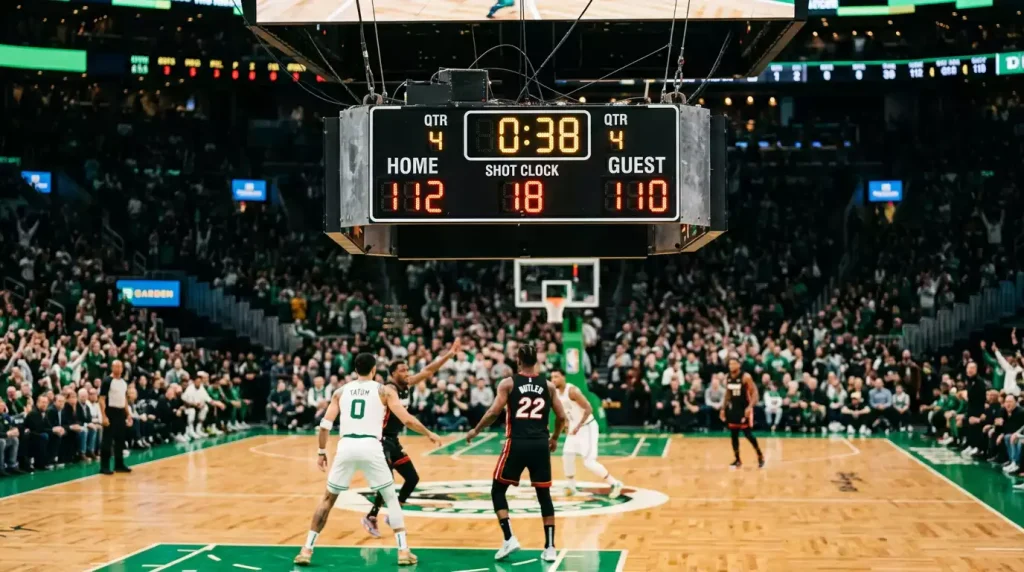
The most critical metric for projecting game scores is the pace factor in NBA totals, as it dictates the expected number of possessions.
Five Factors That Drive NBA Game Totals
Last season I tracked every NBA total I bet against five variables. Three of them predicted the outcome at a rate well above chance. The other two were noise I had been treating as signal for years. Here is what actually matters.
First, pace. Nothing predicts the total of a basketball game more reliably than the combined pace of the two teams on the floor. When two top-five pace teams meet, the median game total overshoots the posted number by roughly two to three points. When two bottom-five pace teams collide, the reverse happens. If you are only going to look at one number before betting a total, make it pace. I have written a detailed breakdown of pace factor and its correlation to totals that walks through the calculation step by step.
Second, defensive efficiency. A team allowing fewer than 108 points per 100 possessions suppresses totals regardless of the opponent’s offensive firepower. The effect compounds when both teams defend well — those are the games that land six or seven points below the posted total and leave over bettors furious.
Third, fatigue. Garcia et al. documented a physical performance decline with an effect size of -1.27 between the first and fourth quarters of NBA games. That cumulative fatigue does not just affect who wins — it drags down scoring in the second half, particularly in the final period when tired legs mean shorter possessions and more isolation plays. Teams on the second night of a back-to-back show a measurable dip in offensive output: somewhere between one and three points below their season average, with the effect strongest on the road.
Fourth, three-point volume. The modern NBA is built around the three-point shot, and games between high-volume shooting teams carry more scoring variance. A team launching 45 threes a night can swing the total by eight or nine points depending on whether they shoot 30% or 40% from deep. Variance is not edge, though — it just means the outcome is less predictable, which is a reason to be cautious, not aggressive.
Fifth, rest and schedule context. I used to treat this as a minor factor. It is not. The median pace in fourth quarters of close games drops to 90-100 possessions, well below the first-half tempo. When both teams are rested and locked in defensively, that late-game slowdown bites harder. When one team is gassed from a back-to-back, the pace drops further because tired teams play slower, run fewer transition opportunities, and lean on half-court sets that eat clock.
Seasonal Trends: Why Totals Shift from October to April
Here is something I wish someone had told me a decade ago: the NBA regular season is not one market. It is at least three distinct phases, and each one behaves differently for totals bettors.
October through November is chaos. Rotations are not set, new players are learning systems, and defensive intensity is low. Totals tend to run high in this window because teams have not yet developed the cohesion to execute half-court defence consistently. Overs hit at elevated rates during the first month, and bookmakers sometimes lag behind the early-season scoring surge by a game or two.
December through February is where the market tightens. Teams have enough data to calibrate their projections, rotations stabilise, and the betting lines become more efficient. This is the hardest stretch to find value in totals, because the sample sizes are large enough for bookmakers to price games accurately. I scale back my totals volume during this window and focus more on spread opportunities where situational edges — travel, fatigue, motivation — create bigger mispricings.
March through April is the stretch run, and it brings two opposing forces. Contending teams tighten their rotations and ramp up defensive effort as they prepare for the playoffs. That defensive intensity pushes scoring down and creates under value, particularly in games between two playoff-bound teams with something to play for. Meanwhile, teams out of contention rest starters, play young players heavy minutes, and generally stop caring about defensive assignments. Those games tend to go over because the talent gap between starters and end-of-bench players shows up on the defensive end far more than the offensive end.
The practical takeaway: segment your totals analysis by calendar period. A system that works in November will lose money in January if you do not adjust for how the league’s scoring patterns evolve across the season.
Building a Totals System That Accounts for Pace and Fatigue
I am going to walk you through the exact framework I use for totals, stripped down to the essentials. You do not need a machine learning model or a paid data subscription. You need pace numbers, a schedule grid, and discipline.
Step one: pull each team’s pace rating from a free source like Basketball Reference or NBA.com’s advanced stats page. You want possessions per 48 minutes, updated through the current week. Average the two teams’ pace numbers to get a projected game pace.
Step two: calculate an expected total. Take the projected game pace, multiply it by the sum of each team’s offensive efficiency divided by 100, and you get a raw projected total. This is a rough estimate — it ignores venue effects and matchup specifics — but it gives you a baseline to compare against the bookmaker’s posted number.
Step three: apply adjustments. If one team is on the second night of a back-to-back, subtract 1.5 points from the raw total. If the game is the last of a long road trip (four or more games), subtract another point. If both teams are rested and rank in the top ten defensively, subtract two points. These adjustments are not arbitrary — they are drawn from years of tracking how schedule and defensive context shift actual scoring relative to pace-based projections.
Step four: compare your adjusted total to the bookmaker’s line. If the gap is two points or more, you have a potential bet. If the gap is less than two points, pass. The margin exists because bookmaker totals are already quite good; you need a meaningful discrepancy to justify the commission built into the odds.
Step five: check the line across at least three UK-licensed bookmakers. Totals vary by a point or more between platforms, and that difference matters. A total of 221.5 at one shop versus 223.5 at another is a different bet entirely. Always take the number that gives you the widest gap between your projection and the posted line.
The discipline part is the hardest. Some nights, no totals qualify. My system flags roughly 15-20% of the regular-season schedule as actionable, which means most nights I am watching games without a totals bet on the card. That restraint is the difference between a system that grinds out profit over a season and one that bleeds money on marginal spots.
Find the most accurate predictions and data models at CourtEdge, the ultimate NBA betting systems guide for UK bettors.
Where UK Bettors Find the Best Totals Value
Betting NBA totals from the UK has one structural advantage that most American bettors do not appreciate: competition among licensed bookmakers. The UK market has a dozen or more operators offering NBA totals on every game, and their lines do not always agree. I have seen full-point discrepancies on opening totals between operators on the same Tuesday night slate — that is free money if you are positioned to act quickly.
The live/in-play market is where totals value has migrated most aggressively. In-play betting accounted for 62.35% of online betting revenue in 2025, and that share keeps climbing. NBA totals shift constantly during a game as scoring runs, foul trouble, and substitution patterns change the expected final score. If you have done your pre-game work and know that a game’s pace profile points to an under, a first-quarter scoring burst that pushes the live total up by four or five points is an opportunity, not a reason to abandon your thesis.
One word of caution for UK bettors new to NBA totals: the time difference works against impulsive decisions. Most NBA games tip off between 23:00 and 03:30 GMT. Late-night betting when you are tired and less disciplined is a recipe for chasing losses. Set your bets before tip-off based on your system, and use the live market only when a clear trigger fires — not because you are bored at midnight watching a blowout.
The totals market rewards patience, preparation, and a willingness to sit out more games than you bet. That is not glamorous, but after eleven years of doing this, I can tell you the unsexy approach is the one that pays.
Articles



Published by the CourtEdge team.
